

TL;DR: Phantom limb pain is real pain that feels like it comes from an arm or leg that has been amputated, and it is caused by changes in the nerves, spinal cord, and brain, not by imagination. It matters because this pain can last for years, affect work, sleep, and mood, and should be fully counted in any injury claim after an accident that led to an amputation.
Phantom limb pain is pain that a person feels in a part of the body that is no longer there. After an amputation, many people still feel burning, stabbing, cramping, or electric shock pain in the missing hand, foot, arm, or leg. The pain is real. It comes from the nervous system, which keeps sending and reading signals from a limb that has been removed.
As of 2026, medical research continues to show how common this is. Studies have commonly reported that a large majority of people who lose a limb, often cited as up to about 80 percent, experience phantom limb pain at some point. It often starts within days or weeks of the amputation, and for some people it lasts for years.
What Is Phantom Limb Pain?
Phantom limb pain is painful sensation that feels like it is located in a missing limb after an amputation. It is one of three related experiences that people often confuse, and knowing the difference helps you describe your symptoms to doctors.
| Experience | What it feels like | Where it is felt |
|---|---|---|
| Phantom sensation | Feeling that the missing limb is still there, such as itching, warmth, or the sense of moving toes | In the missing limb, without pain |
| Phantom limb pain | Burning, stabbing, shooting, cramping, or crushing pain | In the missing limb |
| Residual limb pain | Soreness, sharp pain, or tenderness | In the remaining part of the limb, sometimes called the stump |
Many people have more than one of these at the same time. Telling your doctor exactly which one you feel, and where, helps guide the right treatment.
Why Does Phantom Limb Pain Happen?
Phantom limb pain happens because the nerves, spinal cord, and brain keep acting as if the missing limb is still there, and the signals they create get read as pain. Doctors believe several things work together:
- Damaged nerve endings: When a limb is removed, the cut nerve endings at the amputation site can form small tangled bundles called neuromas. These can fire off signals on their own, and the brain reads them as coming from the missing limb.
- A more sensitive spinal cord: After an injury, the nerves in the spinal cord can become more sensitive and start to amplify pain signals. This is sometimes called central sensitization.
- The brain rewires its body map: The brain holds a map of the whole body. When one part is gone, nearby areas of that map can take over the unused space. This rewiring, called cortical remapping, is linked to phantom pain in many studies.
- Pain the body remembers: Some research suggests that people who had strong pain in the limb before it was removed may be more likely to feel phantom pain afterward, almost as if the nervous system remembers it.
This is why phantom pain after a traumatic accident deserves attention. A limb lost in a violent crash, a crush injury, or a failed limb salvage attempt often means severe pain before the amputation, and that history can shape what comes after.
What Does Phantom Limb Pain Feel Like, and What Makes It Worse?
Phantom limb pain most often feels like burning, shooting, stabbing, cramping, or crushing pain in the missing limb, and it can come in short attacks or stay constant for long periods. Some people also feel the missing hand or foot is twisted or stuck in a painful position.
Common triggers include:
- Stress, worry, or emotional upset
- Being tired or not sleeping well
- Changes in weather, especially cold
- A prosthesis that does not fit well
- Touching or bumping the remaining part of the limb
- Other health problems, such as poor circulation or an infection
Keeping a simple pain journal can help. Write down when the pain starts, how strong it feels on a scale of zero to ten, what it feels like, and what you were doing. Patterns can help your doctors adjust treatment, and the journal becomes a clear record of how the pain affects your daily life.
How Is Phantom Limb Pain Treated?
Phantom limb pain is usually treated with a combination of medicine, therapy that retrains the brain, devices that calm nerve signals, and sometimes surgery, because no single treatment works for everyone. Treatment is often most effective when started early and adjusted over time.
- Medicines for nerve pain. Nerve pain often does not respond well to ordinary pain relievers. Doctors may prescribe medicines made for nerve pain, certain antidepressants, or other options, and the right choice depends on each patient.
- Mirror therapy. A mirror is placed so the person sees the reflection of their remaining limb where the missing limb would be. Moving the healthy limb can trick the brain and ease pain for some people. Related methods include graded motor imagery and virtual reality training.
- Electrical nerve stimulation. A small device sends mild electrical pulses through the skin to calm nerve signals. This is called TENS.
- Nerve blocks and stimulators. A pain specialist may inject numbing medicine near a nerve for relief, or place a stimulator near the spinal cord for severe, lasting pain.
- Nerve surgery. Procedures such as targeted muscle reinnervation connect cut nerves to nearby muscles, giving them a new job. Research has linked these surgeries to less phantom and residual limb pain in many patients.
- Prosthetic care and therapy. A well fitted prosthesis, regular adjustments, and physical therapy can reduce pain triggers and improve daily function.
- Pain psychology. Counseling, including cognitive behavioral therapy, can help people manage pain, stress, and sleep problems.
Treatment for phantom limb pain is often ongoing. A person may need new medicines, repeat procedures, prosthetic changes, and specialist care for years, which matters when looking at the long term cost of the injury.
The Emotional Impact of Phantom Limb Pain
Phantom limb pain can take a heavy emotional toll, and many people who live with it also deal with depression, anxiety, poor sleep, and grief over the loss of their limb and the life they had before. Pain that comes from a body part that is no longer there can feel confusing and isolating, especially when others do not understand it.
Imagine someone who lost part of a leg after being struck by a truck while crossing a Queens street. The wound heals and they learn to walk with a prosthesis. Then, at night, a burning pain seems to shoot through a foot that is gone. They lose sleep, dread the next attack, and start to wonder if anyone believes them. That mix of pain, exhaustion, and doubt is common, and it is not a sign of weakness.
An amputation after a traumatic accident can also bring post traumatic stress, changes in how a person sees themselves, and strain on family members who help with care. Mental health treatment is a real part of recovery, not an extra. Getting that care also creates a record of how deeply the injury has affected your life.
Long Term Damages for Phantom Limb Pain in an Injury Case
In a New York injury case, phantom limb pain is part of the long term damages from an amputation, and it can include future pain and suffering, ongoing medical and prosthetic costs, mental health care, and lost earning power for the rest of the person's life.
New York law already treats an amputation as a serious injury. Under Insurance Law Section 5102(d), dismemberment is one of the listed categories, which means a person who lost a limb in a car accident generally meets the threshold to sue for pain and suffering. The bigger question is what the claim should include. These are the damages that often come into play:
| Type of damage | How phantom limb pain can affect it |
|---|---|
| Future pain and suffering | Pain that may last for decades adds to what a person endures over their lifetime |
| Future medical care | Pain specialists, medicines, nerve blocks, stimulators, and possible nerve surgery |
| Prosthetic costs | Prostheses wear out and need adjustment or replacement over the years, and pain can make fit more complicated |
| Mental health treatment | Counseling and care for depression, anxiety, or post traumatic stress |
| Lost earnings | Pain attacks, poor sleep, and medical visits can limit the work a person is able to do |
| Life changes | Help at home, home or vehicle changes, and loss of activities a person enjoyed |
The key point is that phantom limb pain is not just a short term symptom. When it is part of an amputation injury, a fair claim should look at how it will affect every year ahead, not just the months after surgery. In serious cases, a life care plan prepared by a medical expert can estimate those future needs and costs.
Common Worries About Phantom Limb Pain Claims
Myth: Phantom limb pain is all in your head. Fact: Phantom limb pain comes from real changes in the nerves, spinal cord, and brain. It is a recognized medical condition with established treatments.
Myth: Pain you cannot see cannot be proven. Fact: Records from pain specialists, treatment history, pain journals, and statements from family members can all show how the pain affects daily life.
Myth: The pain will fade, so it does not need to be part of my claim. Fact: Phantom pain eases for some people over time, but for others it lasts for years. Settling before the long term picture is clear can leave future care unpaid.
Myth: I cannot afford a lawyer for a case this big. Fact: At Segal Law Firm, there is no fee unless we win.
How Segal Law Firm Helps People Living With Phantom Limb Pain
Segal Law Firm helps people in New York who lost a limb in an accident pursue claims that account for the full, lifelong impact of the injury, including phantom limb pain, prosthetic needs, and mental health care. The firm handles catastrophic injury, motor vehicle, construction accident, and premises liability cases across the five boroughs and Long Island, including claims against the City of New York and the MTA.
Cases are handled by founding attorney Matthew B. Segal, a New York trial lawyer recognized by Super Lawyers, and attorney Aaron Tabak. Together they have recovered more than $50 million for injured New Yorkers, including a $5 million recovery for a truck crash victim who suffered spinal and brain injuries. Prior results do not guarantee a similar outcome. For someone facing decades of pain from a limb that is gone, the goal is making sure that future is part of the conversation before any settlement is signed.
Talk With Someone Who Understands Life After Amputation
If you or someone you love is living with phantom limb pain after an accident in New York, you do not have to face the medical and legal questions alone. Call Segal Law Firm at (646) 810-3337 or request a Free Case Evaluation on our contact page. There is no fee unless we win.
If you are helping a family member and want to know who to call later, you can meet the firm in five minutes on the Meet Segal in 5 Minutes page.
Keep Reading
Two related guides cover the questions that usually come next: brachial plexus injury after a car accident and how settlement numbers break down.
Every case turns on its own facts. Tell us what happened in a free case evaluation with Segal Law Firm. There is no fee unless we win.
One last thing before you go. Accidents never happen at a convenient time, so take seven seconds to save Segal in your phone and our number is already there when you need it.
Related Articles

Brachial Plexus Injury After a Car Accident: Symptoms, Treatment, and Legal Options
Learn how a car accident can cause a brachial plexus injury, what symptoms to watch for, treatment options, and why these claims often carry high value.
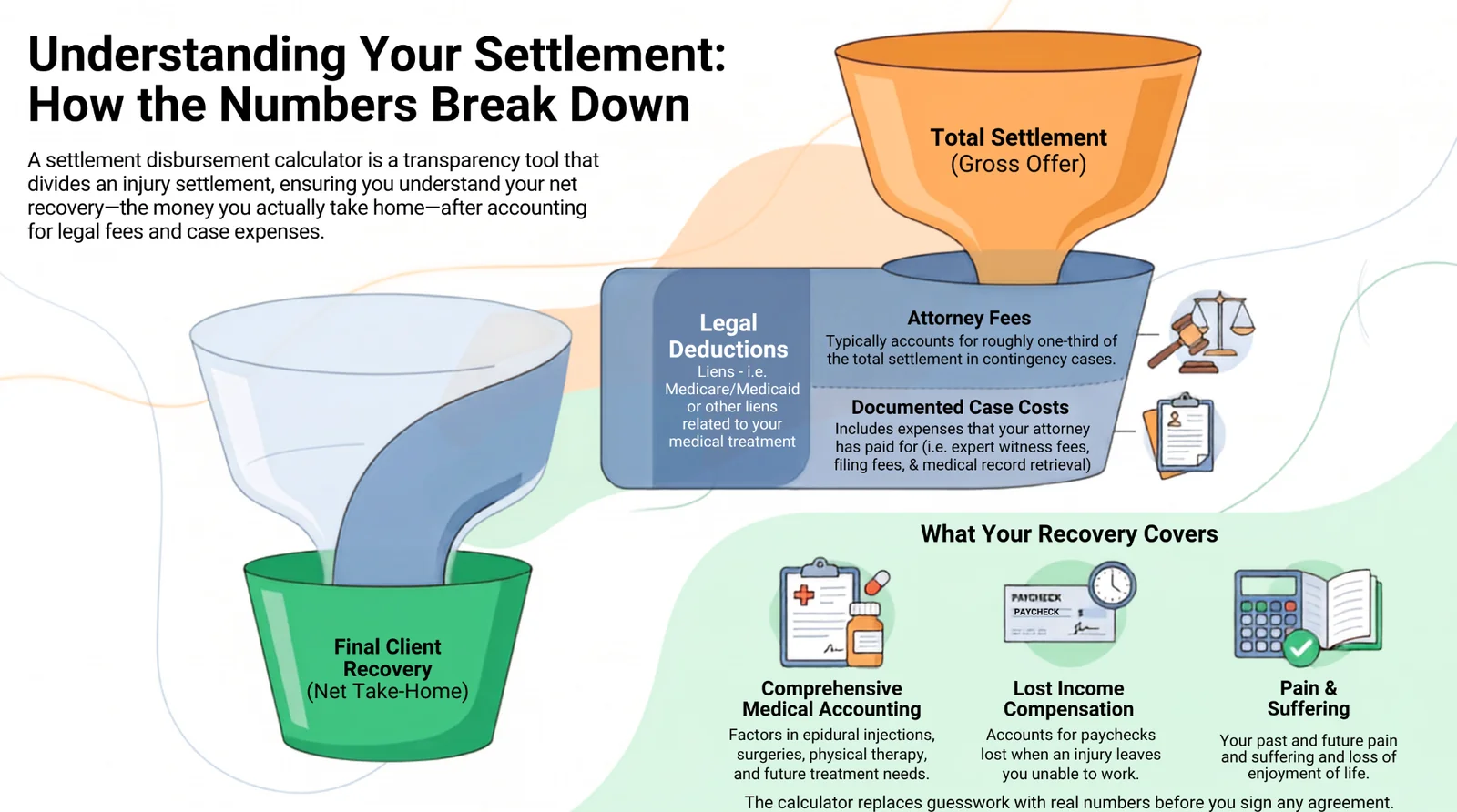
Understanding Your Settlement: How the Numbers Break Down
A visual guide to how an injury settlement actually breaks down, from the gross offer through legal deductions to your final net take-home recovery, including what your compensation truly covers.
Get new articles like this by email
Join our list for plain-English New York injury law updates, new case results, and practical guidance from Matt Segal.