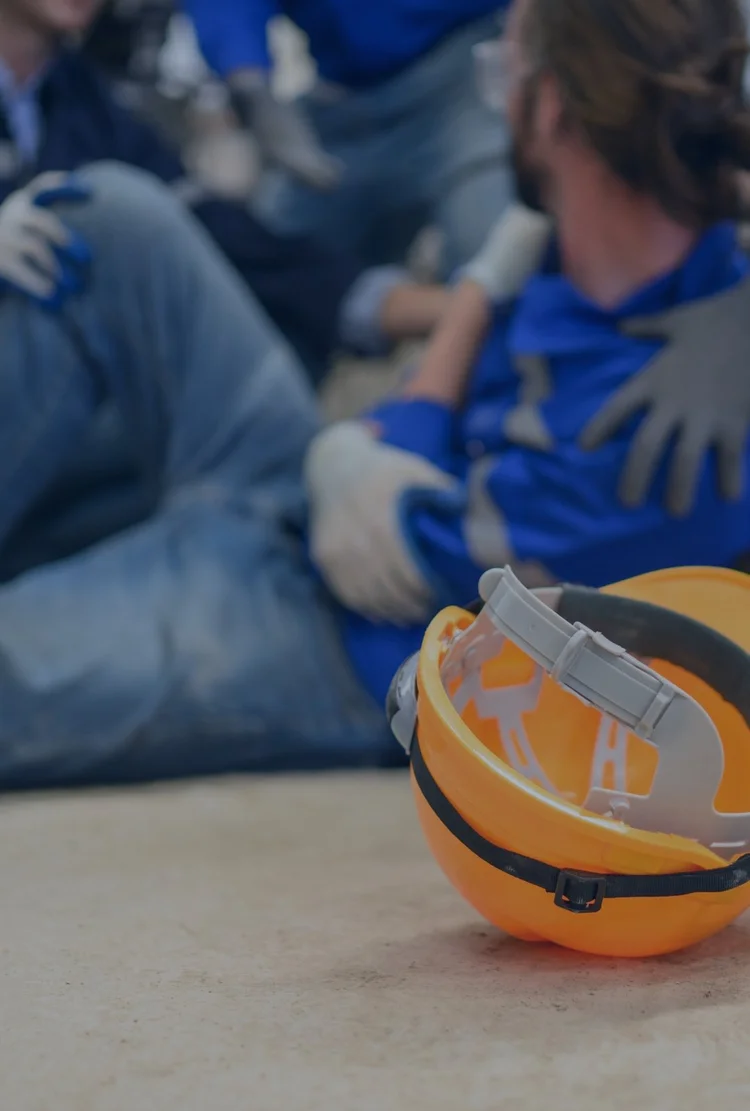
Construction is one of the most dangerous industries in New York, and when corners get cut, workers pay the price. Segal Law Firm makes the owners, GCs and contractors who created the hazard pay you.
We've spent decades suing the biggest names in New York construction. Workers' Comp is rarely the end of the story, Labor Law 240 and 241 give injured workers powerful additional rights, and most people are never told about them.
Workers' Comp is not your only option
If you were hurt on a New York construction site, Workers' Comp pays a portion of your wages and medical bills, but it does NOT pay for pain and suffering, and the amount is rarely enough to support your family.
New York's Labor Law §§ 240 ('Scaffold Law') and 241(6) let you bring a separate third-party lawsuit against the property owner, general contractor, and other parties for the full value of your injuries, on top of Workers' Comp.
What a third-party claim can recover
Full lost wages (past & future)
Pain and suffering
Future medical care
Loss of earning capacity
Permanent disability
Loss of consortium for spouse
What to do after a site accident
Workers are often pressured by employers to stay quiet. Don't.
Report it and get treatment
Tell your foreman in writing and go to the hospital. Refusing care is the #1 way employers and carriers fight your claim later.
Photograph the scene
The scaffold, the harness, the ladder, the missing guardrail. Sites are 'cleaned up' within hours of an accident.
Get names of co-workers
Witness numbers, the GC on site, the safety officer. Crews rotate fast, find them before they're gone.
Don't sign anything
Especially not from the employer, the GC, or their insurance. Call us before you give any statement, recorded or written.
Why injured workers trust Segal
Labor Law 240/241 specialists
These statutes are powerful but technical. We know how to plead them, prove them, and use them to maximize recovery.
Site investigators on day one
We dispatch investigators, photographers and safety experts before the GC alters the scene.
We take on big GCs
Skanska, Turner, Tishman, we've fought them all. Their carriers know our name, and that changes the offer.
Workers' Comp coordination
We work with your Comp attorney (or refer one) so your third-party recovery isn't eaten up by lien repayment.
Related situations
Injuries like these sometimes overlap with other areas of law. These pages may be helpful background, whether any of them applies to your situation is something an attorney would need to review with you.
Scaffolds, ladders, roofs, beams. Section 240 imposes absolute liability when fall protection fails, owners and contractors cannot blame the worker.
Scaffold collapses
Pipe scaffolds, suspended scaffolds, sidewalk sheds. We prove who set it up, who inspected it, and who let it stay up.
Falling objects & debris
Bricks, tools, beams dropped from above. Section 240 also covers workers struck by inadequately secured materials.
Electrocutions & shocks
Exposed wiring, live circuits, ungrounded equipment. We pursue the electrical sub, the GC, and the power company when appropriate.
Trench & excavation collapses
Cave-ins are almost always preventable. OSHA shoring rules are clear, and routinely ignored.
Crane, hoist & forklift
Equipment failures, unqualified operators, signal-person errors. We pursue manufacturers, lessors, and operators.
Burns & chemical exposure
Welding burns, hot tar, solvents, silica dust. We bring in toxicologists and pulmonologists where needed.
Defective tools & equipment
Saws without guards, malfunctioning nailers, broken safety harnesses. Manufacturers can be liable in addition to the contractor.
A deeper look
Workplace injuries in New York: Workers' Comp, Labor Law 240, and the money most workers never hear about
If you were hurt on a job site in New York City or on Long Island, you almost certainly have two separate claims running at the same time. One is Workers' Compensation. The other, the one that pays for pain and suffering, is a third-party lawsuit under the Labor Law. Understanding the difference is worth more than anything else on this page.
Workers' Compensation: what it pays, and what it will never pay
Workers' Comp is no-fault insurance. It covers your authorized medical treatment and a portion of lost wages, calculated as two-thirds of your average weekly wage multiplied by your percentage of disability, up to a state maximum. You must notify your employer in writing within 30 days and file form C-3 with the Board within two years.
What Comp does not pay for is the entire human cost of the injury: pain and suffering, loss of enjoyment of life, the full value of your future earnings, or a spouse's loss of services. Comp is also your exclusive remedy against your direct employer. It is not your remedy against the property owner, the general contractor, a subcontractor, an equipment manufacturer, or a negligent driver, and those are where real recoveries come from.
Written notice to the employer within 30 days
Form C-3 filed within two years
Two-thirds of average weekly wage, subject to a cap
No pain and suffering, ever
Schedule loss of use awards for permanent impairment
Labor Law § 240(1), the Scaffold Law
Section 240 applies to gravity-related risks: a worker falling from a height, or a worker struck by an object that was inadequately hoisted or secured. It imposes absolute, non-delegable liability on the owner and general contractor when proper protection was not provided. That is the strongest liability standard in American injury law.
Because it is absolute, comparative fault generally does not reduce recovery, and a plaintiff who establishes a 240 violation can win summary judgment on liability before trial, leaving only damages to be decided. The defense is narrow: they must show the worker was a 'sole proximate cause,' typically by proving adequate safety devices were available, the worker knew to use them and was expected to, and chose not to for no good reason. That is a demanding standard, and it is why 240 cases settle for far more than ordinary premises claims.
Labor Law § 241(6) and § 200
Section 241(6) requires compliance with the concrete, specific provisions of the Industrial Code (12 NYCRR Part 23), the rules on ladder footing, guardrails, floor openings, debris removal, tripping hazards, lighting, and protective equipment. Pleading the correct, specific code provision is what makes or breaks these claims, and generic safety language will be dismissed.
Section 200 codifies common-law negligence and reaches owners and contractors who actually supervised or controlled the work, or who created or knew of the dangerous condition. Most serious site cases plead all three theories together, plus OSHA violations as evidence of the standard of care.
Ladder and scaffold securing requirements
Guardrails and unprotected floor openings
Debris, tripping and slipping hazards
Inadequate lighting in work areas
Missing or defective protective equipment
Hoisting and material-securing rules
Who can be sued besides your employer
The property owner and the general contractor are the primary Labor Law defendants and are liable regardless of whether they supervised your work. Beyond them: subcontractors whose work created the hazard, construction managers acting as agents of the owner, equipment lessors, scaffold erectors, and manufacturers of defective tools, ladders, harnesses, or machinery.
Utility companies, the City, and public authorities appear in a substantial number of these cases, and any claim involving a municipal entity requires a notice of claim within 90 days. That short window is the most common way a valuable construction case is lost.
The Comp lien, and why coordination matters
When you recover in a third-party case, the Workers' Comp carrier has a lien on the settlement for the benefits it paid. Under Workers' Compensation Law § 29, that lien must be reduced by the carrier's equitable share of your legal fees and costs, and a properly negotiated Burns v. Varriale allocation can cut it substantially.
Just as important, you must obtain the carrier's written consent (or a court order) before settling the third-party case. Settling without consent can forfeit your future Comp benefits entirely. We coordinate with your Comp attorney throughout so the recovery you sign for is the recovery you keep.
Immigration status does not bar your claim
New York courts have repeatedly held that undocumented workers may pursue Labor Law claims and recover damages, including lost wages. Your status is not disclosed to immigration authorities as part of the case, and it is not a defense that a contractor can hold over you.
It is also illegal for an employer to retaliate against you for reporting an injury or filing a claim. If it happens, that is a separate claim we will pursue.
Beyond construction: other workplace injuries we handle
Not every workplace injury happens on a scaffold. We handle warehouse and forklift accidents, delivery and trucking injuries, restaurant and kitchen burns, building maintenance and elevator injuries, repetitive stress and lifting injuries, machinery amputations in manufacturing, and toxic exposure to silica, asbestos, and solvents.
The analysis is the same in every one: identify whether a party other than your employer contributed to the injury, then pursue the full value of the claim against that party while your Comp benefits keep treatment and wages flowing.
Job sites and areas we cover
We represent injured construction and warehouse workers across Manhattan, Brooklyn, Queens, the Bronx, Long Island, and Staten Island, on high-rise builds, residential renovations, infrastructure and MTA projects, warehouses, and utility work. We speak Spanish and Polish, and we meet workers at home or in the hospital.
Manhattan high-rise sites
Brooklyn & Queens residential builds
The Bronx
Staten Island
Long Island
Nassau County
Suffolk County
MTA & infrastructure projects
Warehouse & distribution centers
Utility & roadway work zones
Frequently asked
Answers before you call
If I'm undocumented, can I still bring a claim?+
Yes. New York courts have consistently held that immigration status does not bar you from pursuing a construction injury claim, including under Labor Law 240. Your status will not be shared with immigration authorities.
I already filed Workers' Comp. Can I still sue?+
Generally yes. Workers' Comp is your remedy against your direct employer, but you can still sue the property owner, general contractor, and other parties for full damages including pain and suffering.
What is the 'Scaffold Law'?+
Labor Law § 240 imposes absolute liability on owners and contractors when a worker is hurt because of a gravity-related risk and proper fall protection wasn't provided. It's one of the strongest worker-protection laws in the country.
How long do I have to file?+
Generally three years for the third-party lawsuit and 30 days to report to your employer for Workers' Comp. If a public entity is involved (NYC, MTA, school district), you may have only 90 days. Call us early.
What if my employer says I caused the accident?+
Under Labor Law 240 comparative fault is irrelevant, the worker's conduct generally does not reduce recovery when fall protection failed. Don't let the employer's narrative end your claim.
What does it cost?+
Nothing upfront. We work on contingency, paid only out of the recovery. All case costs are advanced by the firm.
What is the difference between Workers' Comp and a third-party lawsuit?+
Workers' Comp is no-fault insurance from your employer that pays medical care and part of your wages, but never pain and suffering. A third-party lawsuit is brought against someone other than your employer, typically the property owner, general contractor, or a subcontractor, and recovers the full value of your injuries. Most injured construction workers are entitled to both.
What does Labor Law 241(6) require?+
It requires owners and contractors to comply with specific Industrial Code rules, things like ladder footing, guardrails, covering floor openings, debris removal, and adequate lighting. Unlike Section 240, comparative fault can reduce recovery, but the claim reaches many hazards that are not fall-related.
Do I have to give up my Workers' Comp if I sue?+
No, but you must get the Comp carrier's written consent before settling the third-party case, or you can forfeit future benefits. The carrier also holds a lien on the recovery, which must be reduced by its share of legal fees and can often be negotiated down further.
How much is a New York construction accident case worth?+
Falls with fractures or spinal surgery frequently resolve in the high six figures to seven figures, particularly where a Labor Law 240 violation is established and liability is decided before trial. Value tracks surgery, permanence, lost earning capacity, and the coverage stacked across owner, GC, and subcontractor policies.
I was hurt in a warehouse, not on a construction site. Do I have a case?+
Possibly. The Labor Law provisions apply to construction, demolition, and alteration work, but a warehouse, delivery, or machinery injury can still support a claim against an equipment manufacturer, a property owner, a maintenance contractor, or a negligent driver, alongside your Comp benefits.
Will I lose my job for reporting the injury?+
Retaliating against a worker for reporting an injury or filing a Workers' Comp claim is illegal in New York. If it happens, it becomes a separate claim, and we pursue it.
Contact
Hurt on a site? Let's talk today.
Free, confidential consultation. We speak Spanish and Polish. No fee unless we win.